






The GM barre chord guitar is one of the most powerful ways to play the G minor chord across the fretboard. While barre chords can seem challenging for beginners, with proper guidance and step-by-step instructions, you can master this chord and expand your chord ability quickly.
For a complete overview of all GM chord shapes, check out our GM Chord Guitar page.
What Is a GM Barre Chord?
A GM barre chord is a movable version of the G minor chord. Instead of using open strings, you press down all strings with your index finger to form a “bar” across the fretboard.
Why it matters:
Allows you to play minor chords in different positions.
Produces a full, clean sound.
Builds finger strength for advanced chords.
This is a key skill for any serious guitarist.
Step-by-Step GM Barre Chord Instructions
Follow these steps carefully to play a clean GM barre chord:
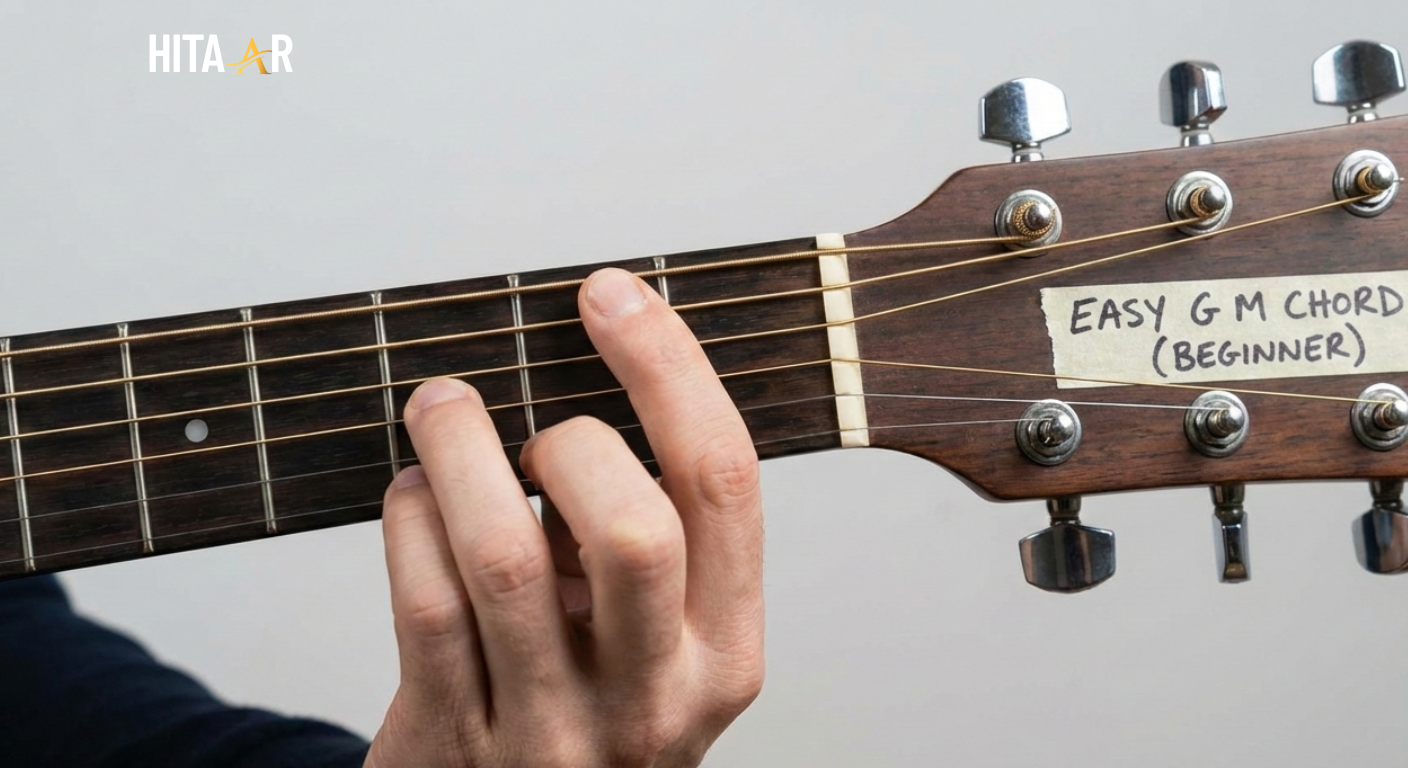
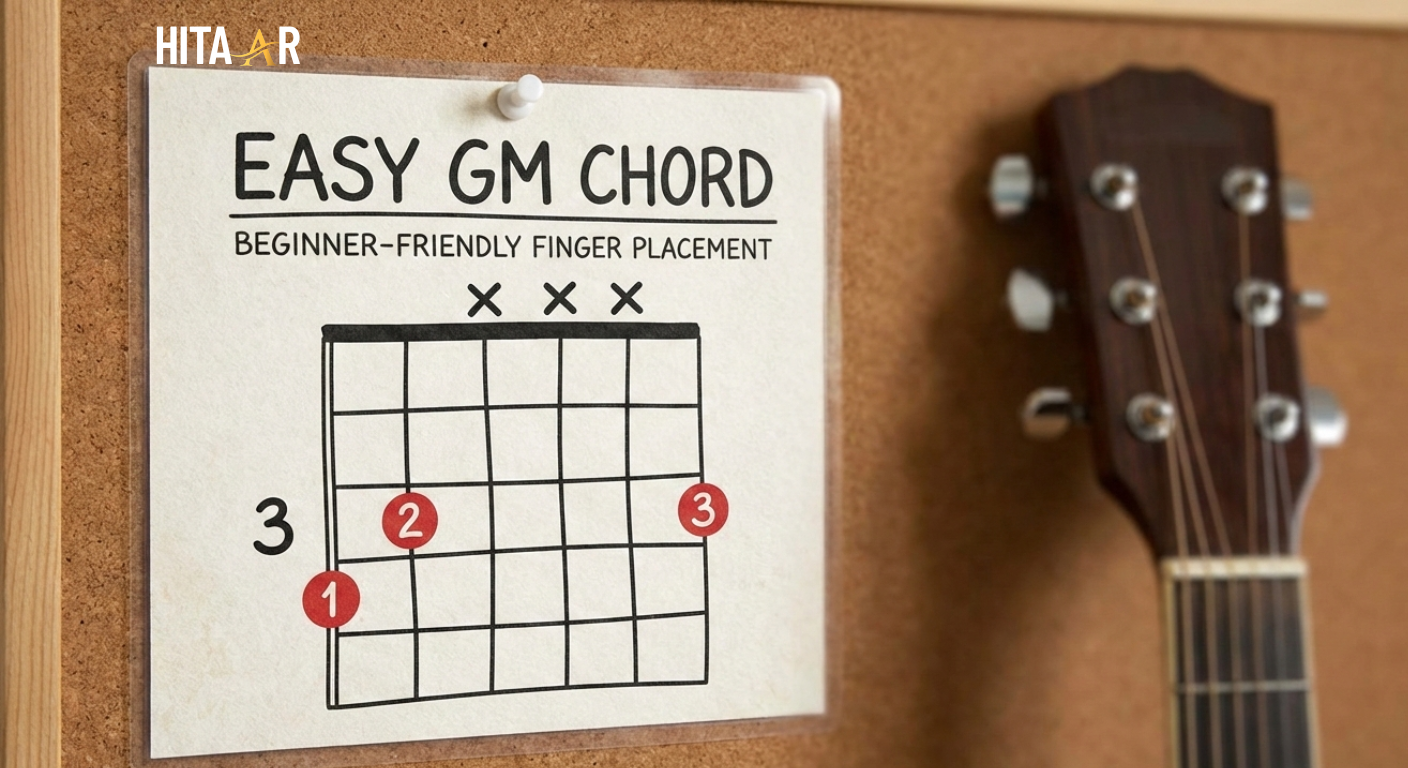
Bar the Fretboard: Place your index finger across all six strings at the 3rd fret.
Place Ring and Pinky Fingers: Position your ring finger on the 5th fret of the A string and your pinky on the 5th fret of the D string.
Middle Finger Position: Place your middle finger on the 4th fret of the G string to complete the minor triad.
Check Each String: Strum slowly to ensure no strings are muted. Adjust finger angles if any notes buzz.
Practice Slowly: Start strumming slowly, then increase speed once your fingers gain strength.
Tip: Keep your thumb behind the neck and wrist relaxed for comfort and control.
For easier GM chord versions, refer to our Easy GM Chord Guitar Version article.
Finger Placement Tips for a Clean Barre Chord
Playing barre chords cleanly is all about finger technique:
Press the bar firmly with the side of your index finger.
Keep your fingers curved to avoid muting nearby strings.
Keep the thumb centred behind the neck to maximize pressure.
Apply even pressure on the frets for a buzz-free sound.
Practicing this daily will strengthen your GM Chord Finger Position for other minor barre chords.
Common Mistakes and How to Fix Them
Many beginners struggle with the GM barre chord. Common mistakes include:
Weak bar pressure: Apply even, firm pressure.
Buzzing strings: Adjust finger angle and position.
Bent wrist: Keep it straight but relaxed.
Rushing chord changes: Slow practice builds muscle memory.
When to Use the GM Barre Chord
The GM barre chord is versatile and can be used in:
Rock and pop songs: Full, strong sound.
Fingerpicking patterns: Use the barre chord for consistent tone.
Chord progressions: Easily move up or down the neck using the same shape.
For examples of songs using GM, see our Songs That Use GM Chord article.
Practice Routine for GM Barre Chord

Here’s a daily practice plan:
Warm-up (5 minutes): Play easy open chords like C, G, and D.
Barre Chord Practice (10 minutes): Focus on pressing the GM barre chord cleanly.
Chord Switching (10 minutes): Move between GM barre and open chords.
Song Practice (5 minutes): Apply the barre chord to a simple song or progression.
Using a metronome or online guitar lessons improves timing and finger coordination.
Benefits of Learning the GM Barre Chord
Even though it’s challenging at first, mastering the GM barre chord provides:
Access to movable minor chords across the fretboard.
Stronger fingers for more advanced chords.
Greater flexibility in song arrangements.
Ability to play different GM chord variations in any key.
Conclusion
The GM barre chord guitar is a must-learn for beginners looking to advance beyond open chords. With proper finger placement, slow practice, and daily exercises, you can achieve a clean sound and confidently use the GM chord in songs.