





Getting the GM chord finger position right is one of the biggest challenges for beginners. Many players know the chord shape but still struggle with buzzing strings, muted notes, or hand pain. The good news is that most problems come from small finger placement mistakes, not a lack of skill.
In this guide, you’ll learn exact finger positions, hand posture, and easy adjustments that help your GM chord guitar sound clean and controlled.
If you want a full overview of all shapes and versions, see our main guide:
👉 GM Chord Guitar – Complete Beginner Guide
Why Finger Position Matters for the GM Chord
The GM chord (G minor) is a minor chord, which means precision matters more than force. Poor finger placement can cause:
Buzzing strings
Muted notes
Hand fatigue
Slow chord switching
Correct finger position helps you:
Get a clean, even sound
Hold barre chords longer
Switch chords faster
Build long-term chord ability
This is especially important if you plan to play barre chords or move across the fretboard.
Standard GM Barre Chord Finger Position (3rd Fret)
The most common GM chord is the E-shape minor barre chord at the 3rd fret.
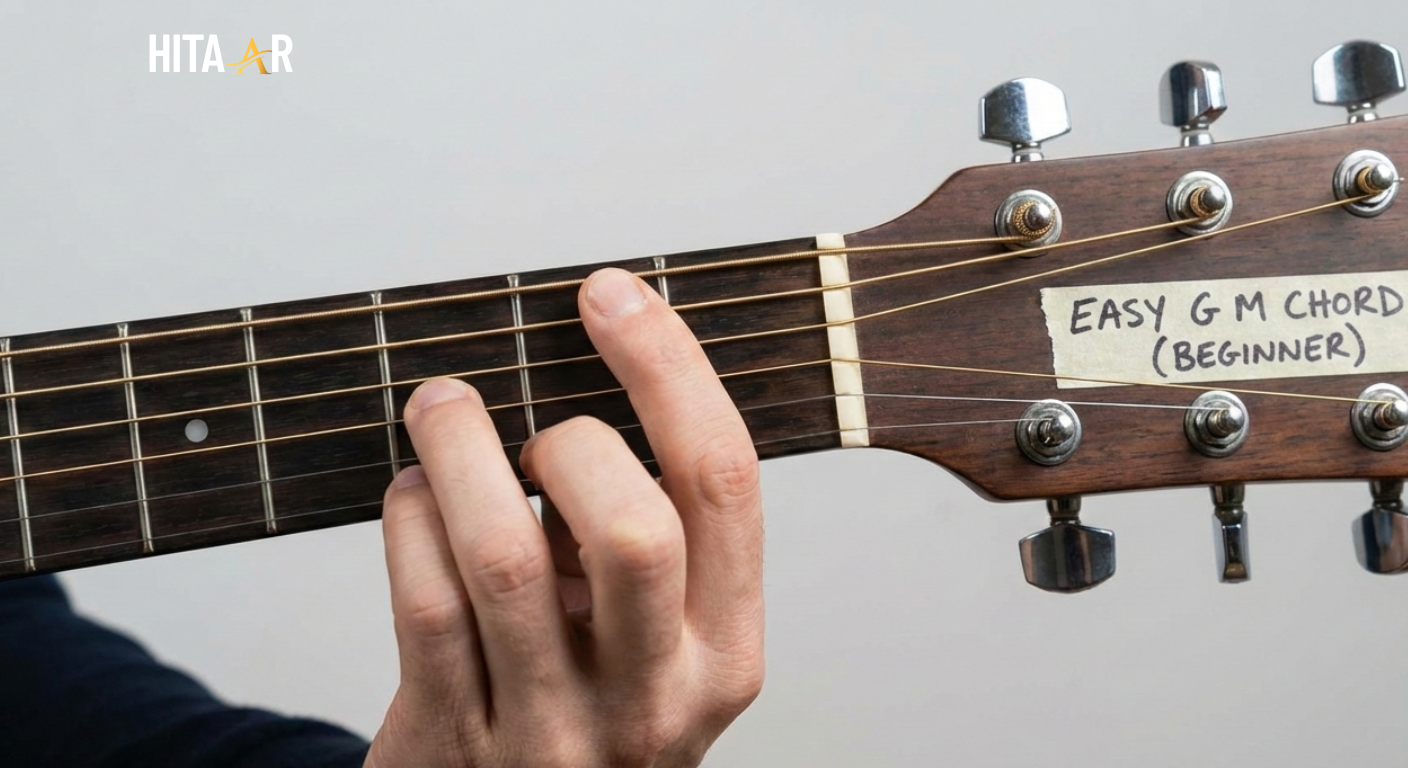
Step-by-step finger placement:
Index finger
Lay it flat across all six strings on the 3rd fret
Use the side of the finger, not the soft center
Middle finger
Place it on the 4th fret of the G string
This creates the minor third (Bb)
Ring finger
Place it on the 5th fret of the A string
Pinky finger
Place it on the 5th fret of the D string
Thumb position
Keep the thumb behind the neck, roughly in the middle
Do not wrap it over the top
Strum slowly and check each string one at a time.
For an easier starting shape, see:
👉 Easy GM Chord Guitar Version for Beginners
Hand and Wrist Position for a Clean Sound
Finger placement works best when your hand position supports it.
Use these tips:
Keep your wrist slightly forward, not collapsed
Let your elbow come slightly away from your body
Relax your shoulder and forearm
Avoid squeezing too hard — pressure should be firm but controlled
A relaxed hand produces a cleaner minor chord sound than a tense one.
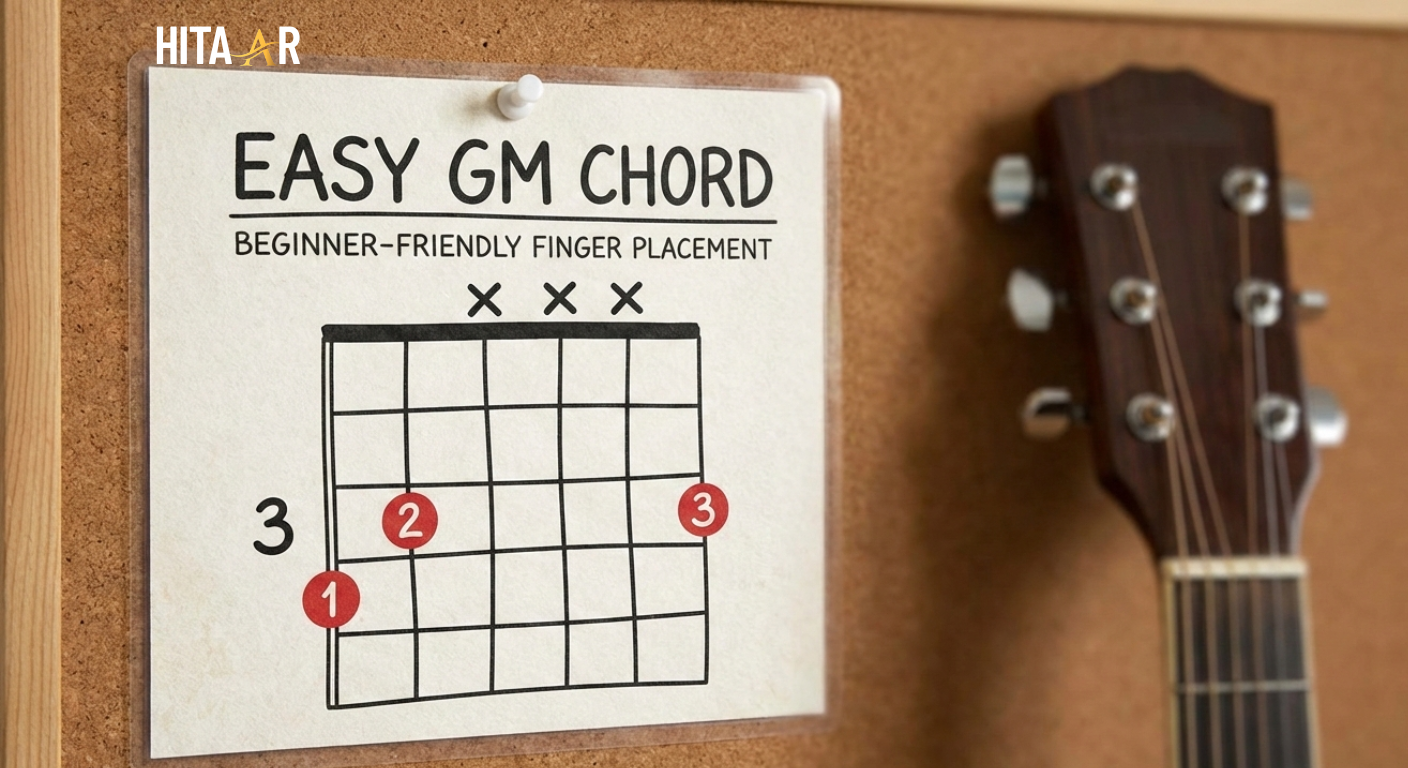
Finger Position for Easy GM Chord (No Full Barre)
Beginners don’t need to start with a full barre. You can use a partial GM chord to train your fingers.
Easy finger position:
Play only 3 or 4 strings
Focus on:
Root note (G)
Minor third (Bb)
Fifth (D)
This version:
Reduces hand strain
Builds accuracy
Prepares you for full barre chord shapes
Once comfortable, you can move back to the full GM barre chord.
Common Finger Position Problems (And Fixes)
1. Buzzing strings
Cause: Index finger not flat enough
Fix: Roll the finger slightly toward the thumb side
2. Muted high strings
Cause: Ring or pinky touching nearby strings
Fix: Curve fingers more and lift knuckles
3. Pain in wrist
Cause: Wrist bent too sharply
Fix: Adjust guitar angle and sit up straight
4. Weak sound
Cause: Fingers too far from the fret
Fix: Place fingers closer to the metal fret wire
These fixes apply to all GM chord guitar shapes, not just barre versions.
Practicing GM Chord Finger Position the Right Way
Instead of repeating the chord blindly, use focused practice.
Daily practice routine:
Hold the GM chord for 10 seconds
Release and relax your hand
Repeat 5 times
Strum each string individually
Switch between GM and another chord slowly
This builds strength and accuracy without overloading your fingers.
How Finger Position Changes Across the Fretboard
As you move GM chord shapes higher or lower on the neck, finger spacing stays the same — only the fret number changes.
This is why good finger position is so powerful:
One shape = many chords
Cleaner transitions
Easier songwriting
Better understanding of minor guitar chords
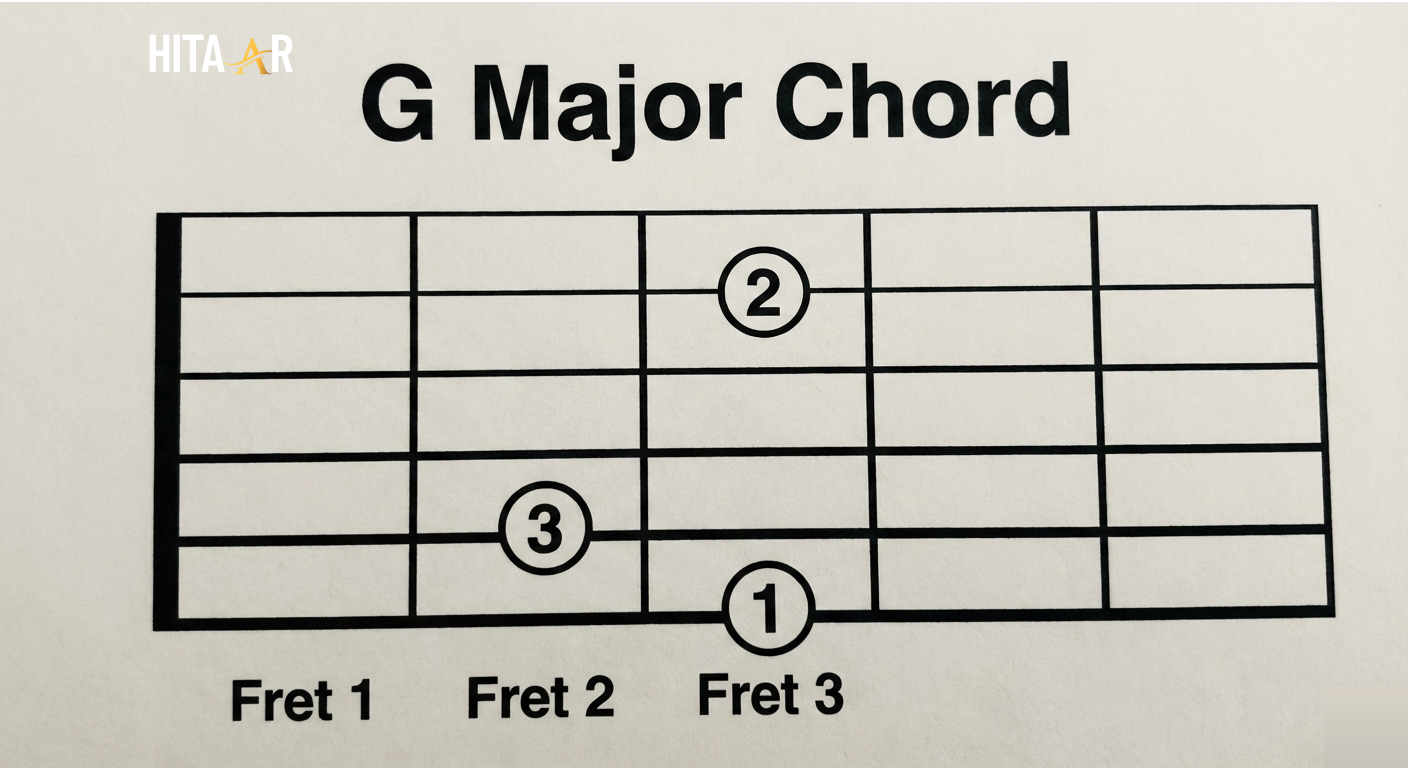
GM Chord Finger Position vs G Major
Many beginners confuse GM and G major finger placement.
Key differences:
GM uses a minor third (Bb)
G major uses a major third (B)
GM finger position removes or lowers one note
Sound becomes darker and more emotional
Understanding this helps you switch between major and minor chords confidently.
Why Mastering Finger Position Improves Your Guitar Journey
When your finger position is correct:
Barre chords become easier
Songs sound cleaner
Practice feels less frustrating
Progress becomes faster
This single skill improves every chord, not just GM.
Conclusion
Mastering GM chord finger position is not about strength — it’s about accuracy, relaxation, and repetition. By placing your fingers correctly, keeping your wrist relaxed, and practicing slowly, you’ll get a clean GM chord much faster than you expect.