







The Gm chord on guitar (G minor) is one of the most expressive and essential chords every guitarist should learn. Built from the notes G, Bb, and D, this chord produces a deep, emotional sound used in many popular songs.
Unlike major chords, which sound bright and happy, the Gm chord delivers a darker, more dramatic tone, making it perfect for emotional music, acoustic performances, and cinematic compositions.
For beginners, this chord may feel challenging because it often uses a barre chord technique, but with the right guidance and practice, it becomes much easier.
Key Highlights of the Gm Chord:
- Built using G (root), Bb (minor third), and D (fifth)
- Produces a sad and emotional tone
- Common in pop, rock, and film music
- Available in multiple shapes for all levels
How to Play the Gm Chord on Guitar (Step-by-Step Guide)


Learning the Gm chord starts with the standard barre chord shape. This version gives a full and rich sound across all strings and is the most commonly used form.
To play it correctly, place your index finger across all six strings on the 3rd fret. Then position your other fingers to complete the shape. Beginners should take their time and focus on accuracy rather than speed.
Step-by-Step Instructions:
- Barre all strings at the 3rd fret using your index finger
- Place your ring finger on the 5th fret (A string)
- Place your pinky on the 5th fret (D string)
- Put your middle finger on the 3rd fret (B string)
- Strum all strings slowly
Pro Tips:
- Keep your wrist relaxed
- Apply even pressure
- Check each string individually
Gm Chord Finger Position for a Clean Sound


Finger positioning is critical for achieving a clean and professional sound. Poor placement can cause buzzing or muted strings, which frustrates many beginners.
To improve your sound, your fingers should be curved and placed close to the frets without touching other strings. This ensures clarity and better tone.
Best Practices:
- Use fingertips instead of flat fingers
- Keep fingers close to fret wire
- Avoid touching nearby strings
- Place thumb behind the neck
Different Gm Chord Shapes Every Guitarist Should Know


Learning these shapes allows you to move across the fretboard with confidence and improves your overall playing skills.
Common Gm Variations:
- Barre chord (3rd fret) – Full sound
- D-shape (10th fret) – Brighter tone
- Triad (3 strings) – Simple and clean
- Beginner version – Easy to play
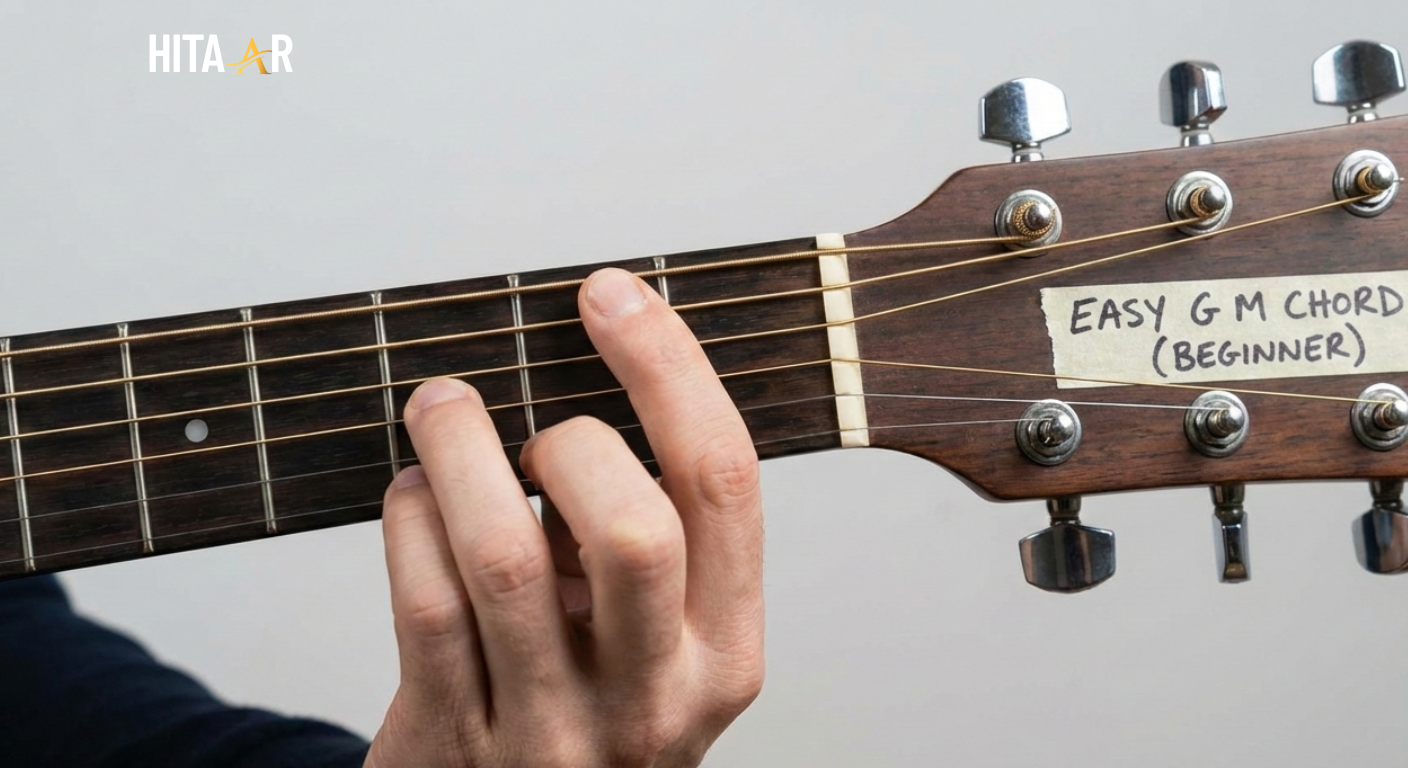
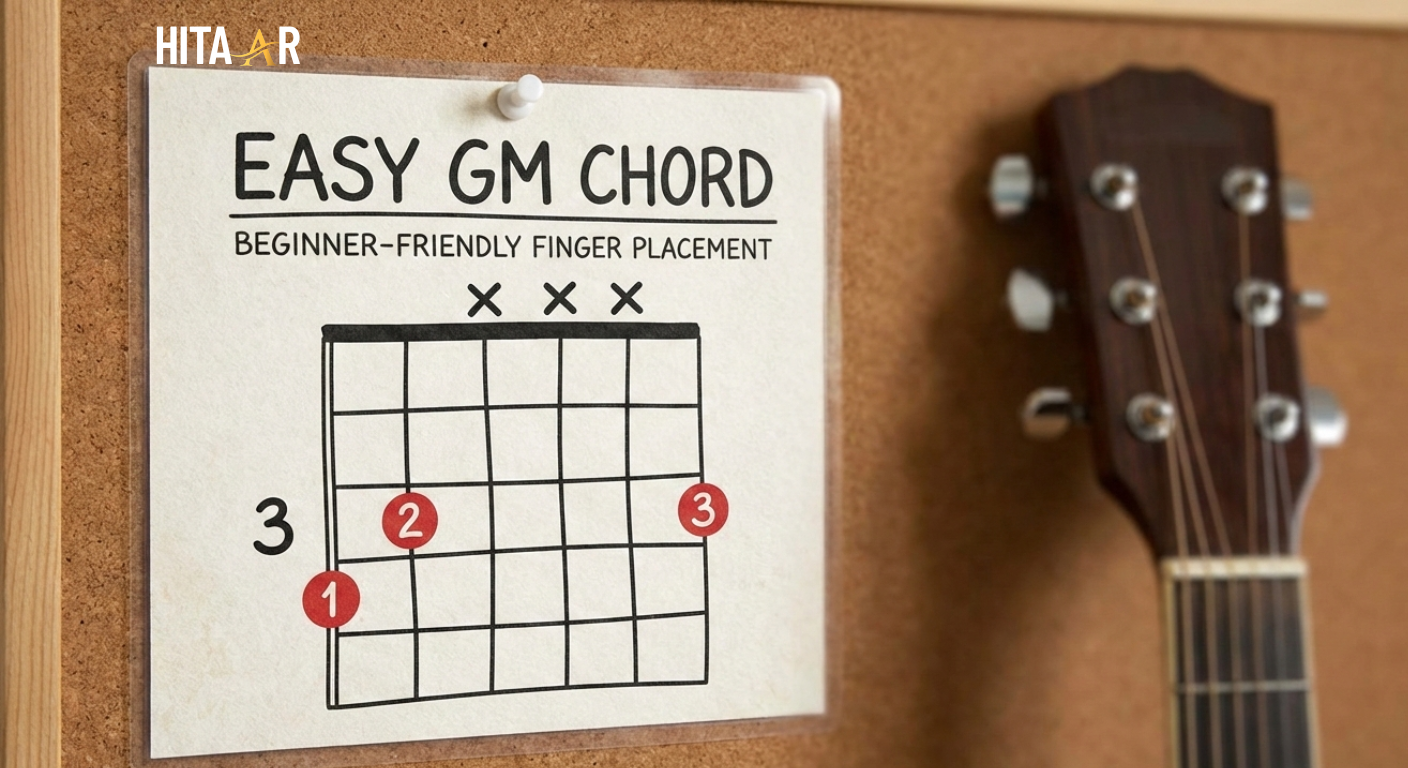
Easy Gm Chord Version for Beginners
If barre chords feel difficult, you can start with a simplified version of the Gm chord. This version uses only three strings, making it much easier to play.
It’s ideal for beginners who are still developing finger strength and coordination.
Benefits:
- Uses fewer strings
- No barre required
- Easier on fingers
- Builds confidence
Gm Barre Chord: How to Play Without Buzzing


Small adjustments can make a huge difference in sound quality.
Tips to Fix Buzzing:
- Use the side of your index finger
- Apply pressure from your arm
- Keep elbow slightly forward
- Adjust wrist angle
Gm Chord Notes Explained (Music Theory Made Simple)


The Gm chord is built from three notes: G, Bb, and D. These notes form a minor triad, which gives the chord its emotional and dark sound.
Understanding these notes helps you learn music faster and improves your ability to play songs and create melodies.
Note Breakdown:
- G = Root
- Bb = Minor third
- D = Perfect fifth
Best Tips to Practice Gm Chord Daily


Create a routine that includes slow practice, chord switching, and rhythm exercises.
Daily Practice Tips:
- Practice 5–10 minutes daily
- Switch between Gm, Bb, F, Eb
- Use a metronome
- Try fingerpicking patterns
Common Gm Chord Mistakes and Fixes


Most beginners struggle with pressure, positioning, and timing.
Common Mistakes:
- Pressing too lightly
- Muting strings
- Bad wrist position
- Rushing transitions
Fix:
- Slow down
- Adjust hand position
- Practice consistently
Gm vs G Major: Key Differences Explained


G major and G minor may look similar, but they sound completely different. This difference comes from the third note.
G major uses B, while G minor uses Bb, creating a noticeable change in tone.
Comparison:
- G Major → Bright, happy
- G Minor → Dark, emotional
Songs That Use the Gm Chord


The Gm chord is widely used in emotional and expressive music. Practicing songs that include this chord helps improve your skills and confidence.
Where It’s Used:
- Acoustic songs
- Pop & rock music
- Film scores
- Fingerstyle guitar
Final Thoughts
The Gm chord on guitar may seem difficult at first, but with consistent practice and the right technique, it becomes much easier over time.
Start with simple versions, focus on clean sound, and gradually move to the full barre chord. This approach ensures steady progress and long-term success.
👉 Mastering the Gm chord will unlock hundreds of songs and take your guitar skills to the next level.
Learn More GM Chord Topics


4 thoughts on “5 Easy Tricks to Master the GM Chord on Guitar Fast!”