


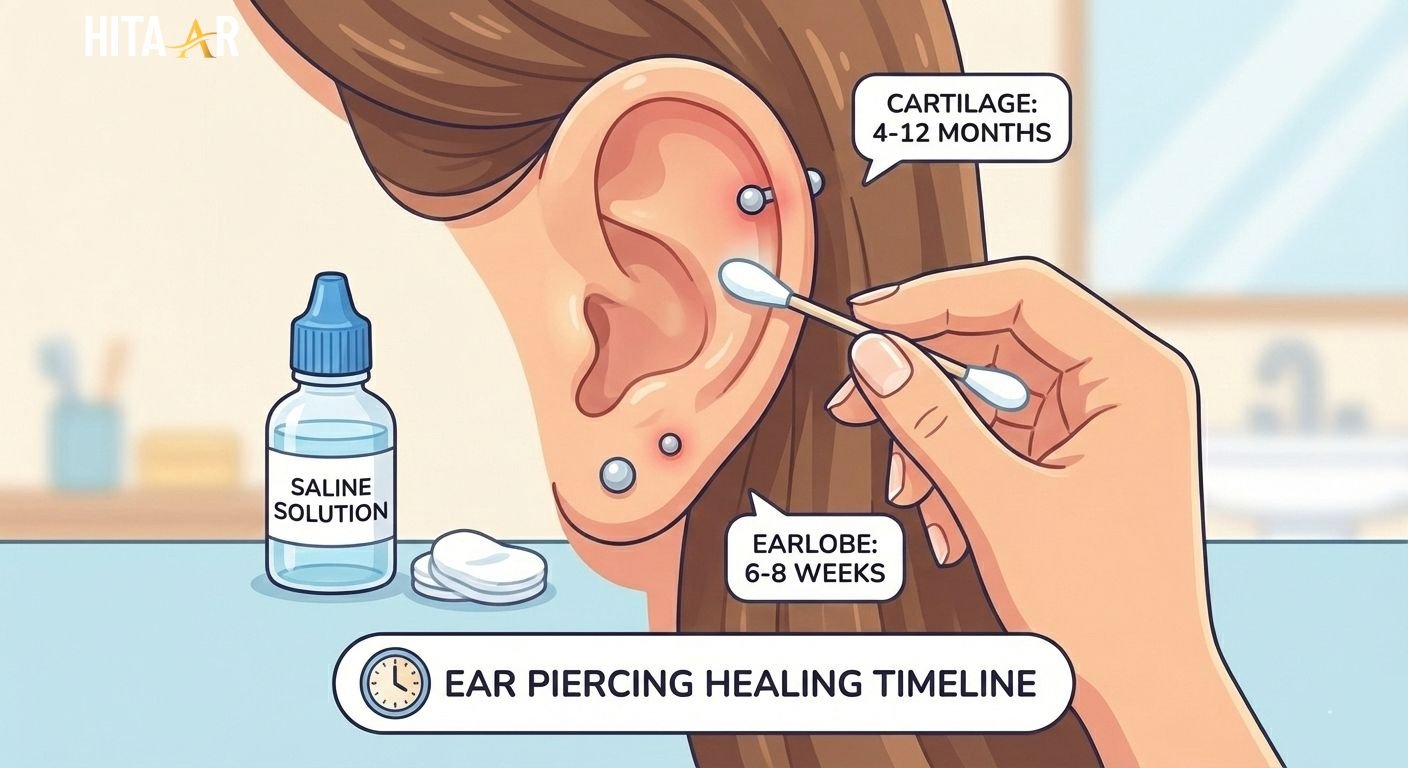
Getting a new ear piercing can be exciting, but one of the most common questions people ask is, “How long does it take for ear piercings to heal?” Understanding the ear piercing healing process is essential to avoid complications, reduce discomfort, and ensure your piercing stays healthy and beautiful. Healing times vary depending on the location of the piercing, whether it’s soft tissue like the earlobe or cartilage areas such as the helix, conch, or daith. While earlobes benefit from better blood circulation in ear piercings and typically heal faster, cartilage piercings take longer to recover due to limited blood flow.
During the healing period, it’s normal to experience mild swelling, redness, and even clear lymph fluid during healing. However, following a proper ear piercing aftercare routine can significantly reduce the infection risk in ear piercings and help you progress smoothly through the piercing healing stages. In this complete guide, we’ll explore ear piercing healing time by location, share expert ear piercing care tips, and provide actionable advice on how to heal ear piercings faster, ensuring your new piercing looks perfect for years to come.
Ear Piercing Healing Time Overview
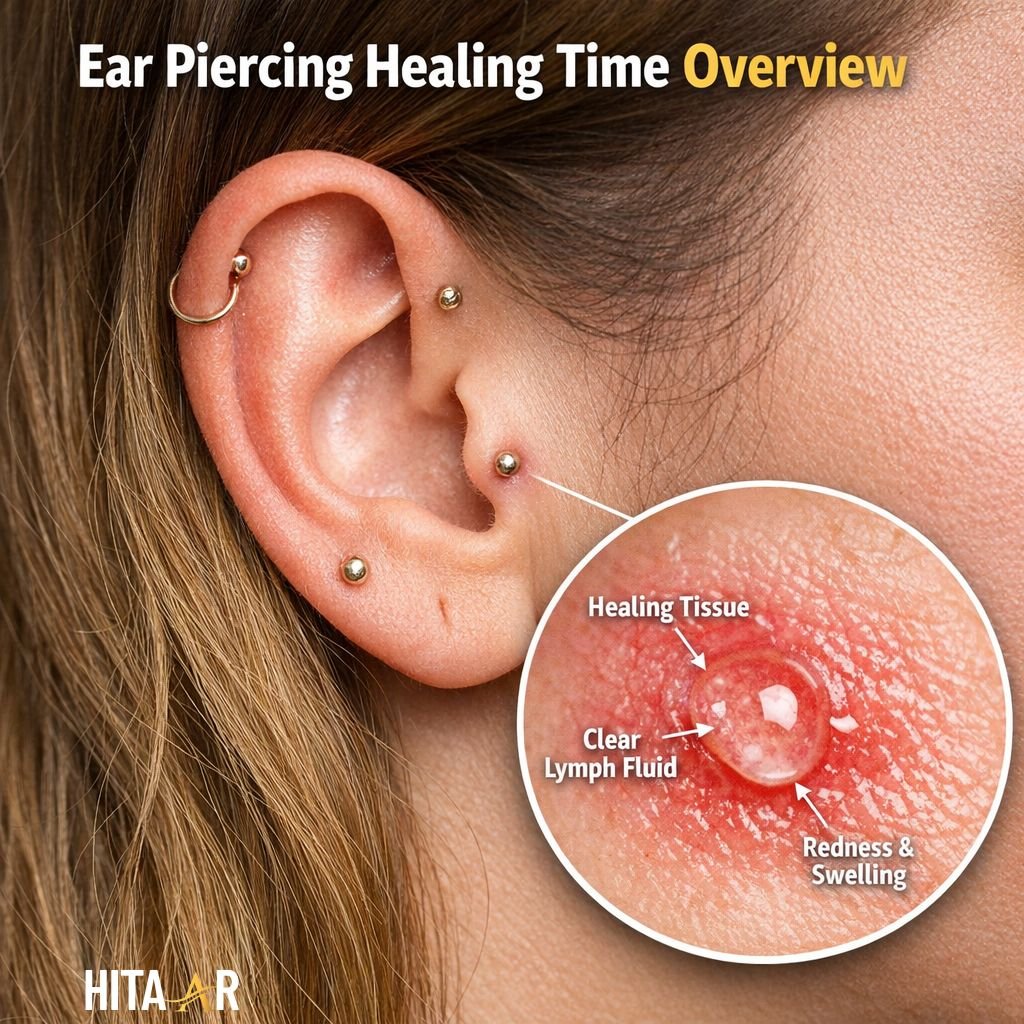
Understanding ear piercing healing time helps you avoid panic when redness or soreness appears. Healing does not happen overnight. Your body treats a piercing like a small wound and repairs it slowly. This ear piercing recovery time varies because ears contain both soft tissue and cartilage.
Another key point is soft tissue vs cartilage healing. Earlobes heal faster because of better blood circulation in ear piercings, while cartilage heals slowly. That’s why experts say cartilage piercings take longer to heal, even when they look fine on the surface.
Average Ear Piercing Healing Time by Location
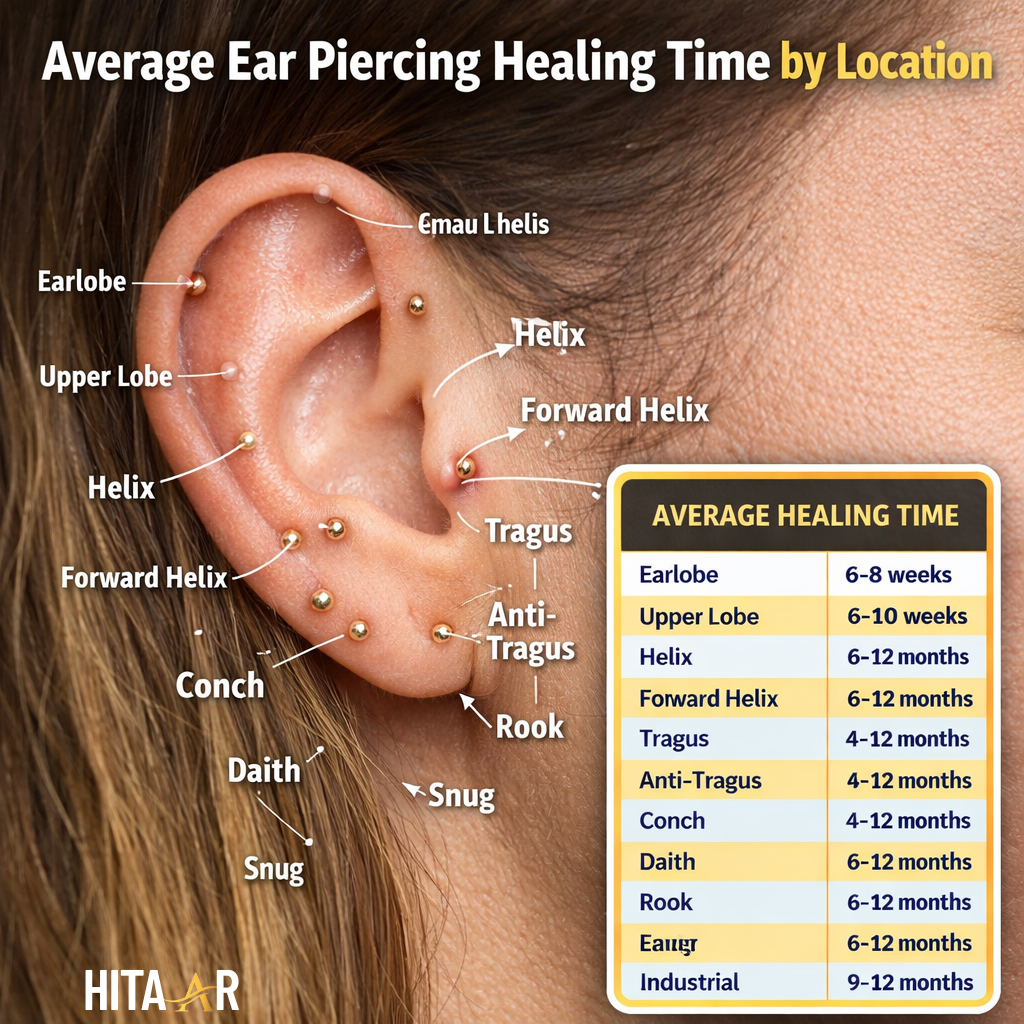
The biggest factor in healing time for ear piercings is where the piercing sits. Each ear area reacts differently due to tissue type and daily movement. Knowing this saves you from changing jewelry too soon.
Below, you’ll see why location matters and how long healing truly takes. This section explains realistic timelines instead of social media myths.
Earlobe Piercing Healing Time
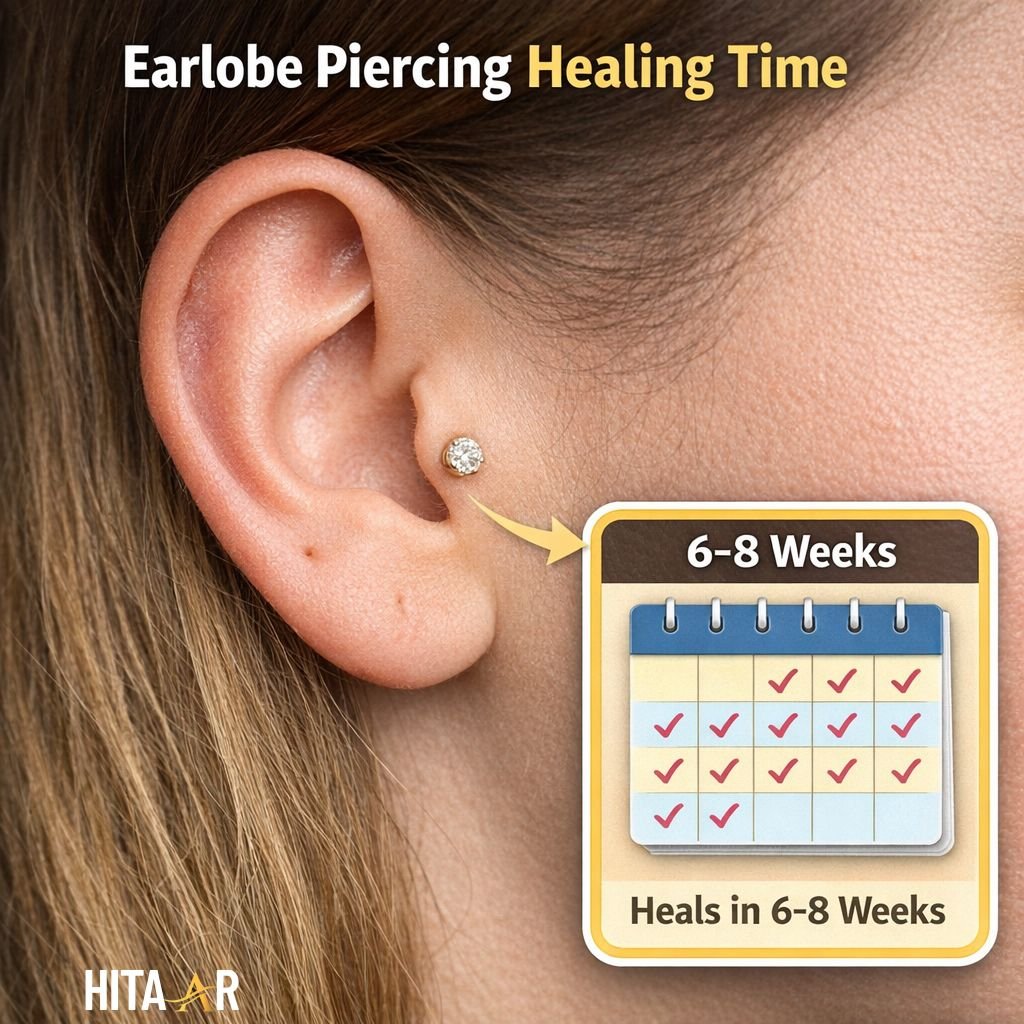
Earlobe piercing healing time is the shortest because the lobe contains soft tissue. Most people heal within weeks when they follow proper care. Swelling fades quickly, and discomfort stays mild.
This area responds well to a proper ear piercing aftercare routine, especially gentle cleaning. Problems usually start only when people rush changing earrings too early, which can reopen the hole.
Upper Lobe Piercing Healing Duration
The upper lobe sits closer to cartilage, so healing slows slightly. The ear piercing recovery time here remains manageable with consistent care. Mild tenderness stays longer than standard lobe piercings.
Avoid pressure and friction during sleep. Even light irritation can extend healing beyond expectations.
Helix Piercing Healing Time
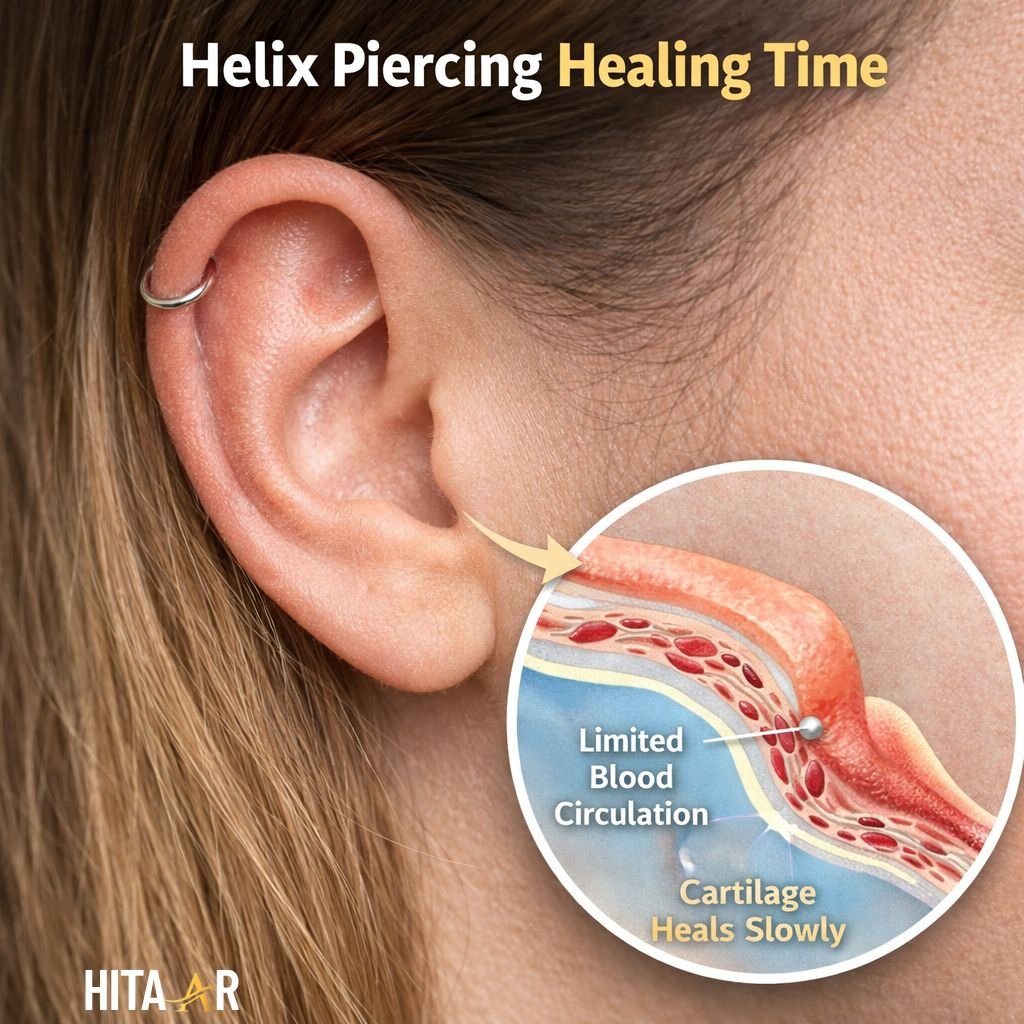
Helix piercing healing duration often surprises people. This is cartilage, and cartilage heals slowly. Pain fades early, but deep healing continues for months.
Because cartilage piercings take longer to heal, patience matters. Sleeping wrong or snagging hair can reset progress.
Forward Helix Piercing Healing Process
The forward helix piercing recovery phase takes time because it sits near the face. Hair products often cause irritation from hair products, which delays healing.
This area needs extra awareness during daily grooming. Even small habits affect results.
Tragus Piercing Healing Timeline
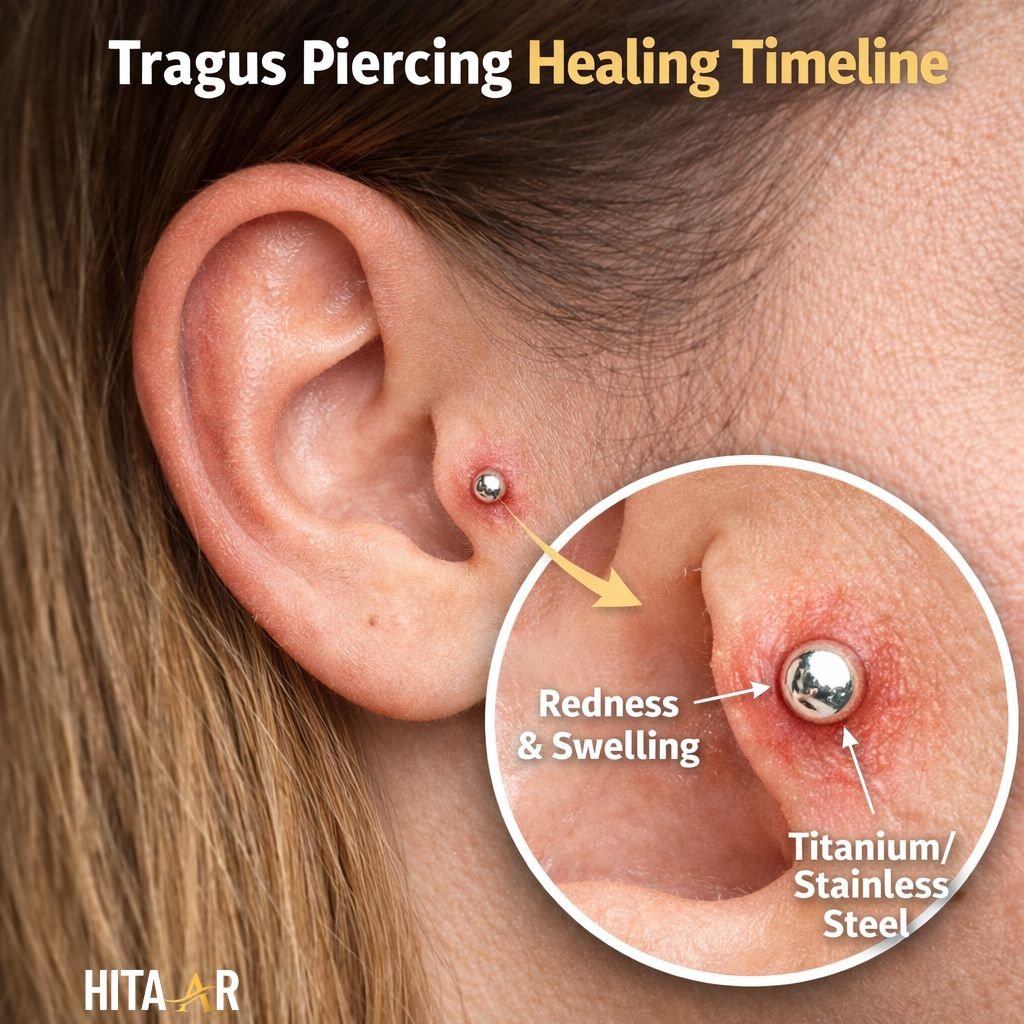
The tragus piercing healing process involves thick cartilage. Cleaning feels tricky due to placement, especially with earbuds.
Avoid pressure from headphones or hats, since trapped bacteria increases infection risk in ear piercings.
Anti-Tragus Piercing Healing Time
Anti-tragus piercing healing time varies widely. This spot experiences constant movement when chewing or sleeping.
Healing stays smooth when pressure remains minimal and cleaning stays consistent.
Conch Piercing Healing Duration
The conch piercing healing timeline depends on whether it’s inner or outer conch. Both involve cartilage and extended healing.
Hats and masks often create friction. Removing pressure helps avoid setbacks.
Daith Piercing Healing Process
The daith piercing healing period feels slow due to limited airflow. Moist environments slow skin repair.
Despite migraine myths, medical proof remains limited. Healing still follows cartilage rules.
Rook Piercing Healing Time
Rook piercing recovery time remains long because of dense cartilage. Cleaning access stays difficult.
Strict hygiene prevents irritation and bumps from forming.
Snug Piercing Healing Timeline
Snug piercing healing difficulty remains high due to constant motion. Swelling lasts longer here.
Avoid touching. Movement delays recovery more than people expect.
Flat Ear Piercing Healing Time
Flat ear piercing healing time matches other cartilage piercings. Styling choices look great but increase snag risk.
Simple jewelry reduces healing delays.
Industrial Piercing Healing Duration
Industrial piercing healing duration stays longest because two wounds heal together. Alignment matters greatly.
Any pressure disrupts both sites and extends healing.
Transverse Lobe Piercing Healing Time
This piercing crosses the lobe horizontally. Despite soft tissue, the angle increases stress.
Healing may rival cartilage timelines due to tension.
Stages of Ear Piercing Healing
The piercing healing stages follow a predictable pattern. Each stage serves a purpose in strengthening tissue.
Understanding these stages helps you stay calm when changes appear.
Initial Healing Phase
Early healing includes swelling and redness after piercing. You may notice clear lymph fluid during healing, which is normal.
This phase lasts days to weeks and feels tender.
Intermediate Healing Phase
During this stage, soreness fades but tissue remains fragile. Itching during piercing healing often appears, signaling repair.
Avoid touching or rotating jewelry, which disrupts healing tissue.
Full Healing and Maturation Phase
The piercing strengthens internally. Pain stops completely.
Only now does jewelry swapping become safe.
Factors That Affect Ear Piercing Healing Time
Multiple elements control ear piercing healing time, not just location. Lifestyle habits matter more than people realize.
Ignoring small details often leads to complications.
Piercing Location and Cartilage Thickness
Cartilage lacks blood supply. Limited oxygen slows repair.
That’s why cartilage piercings demand patience.
Aftercare Routine and Cleaning Habits
A proper ear piercing aftercare routine prevents bacteria buildup. Gentle cleaning supports steady healing.
Overcleaning damages skin and delays results.
Jewelry Material and Quality
Hypoallergenic piercing jewelry reduces reactions. Titanium and surgical steel earrings remain safest choices.
Cheap metals increase inflammation risk.
Immune System and Overall Health
Good sleep and nutrition shorten ear piercing recovery time. Stress slows healing noticeably.
Healthy bodies heal faster.
Infection, Irritation, or Allergic Reactions
Early ear piercing infection signs include heat and pain. Ignoring symptoms worsens outcomes.
Fast treatment protects tissue.
Sleeping Position and Daily Activities
Sleeping on pierced ear applies pressure. This restricts circulation and delays repair.
Travel pillows help reduce strain.
Ear Piercing Aftercare Tips for Faster Healing
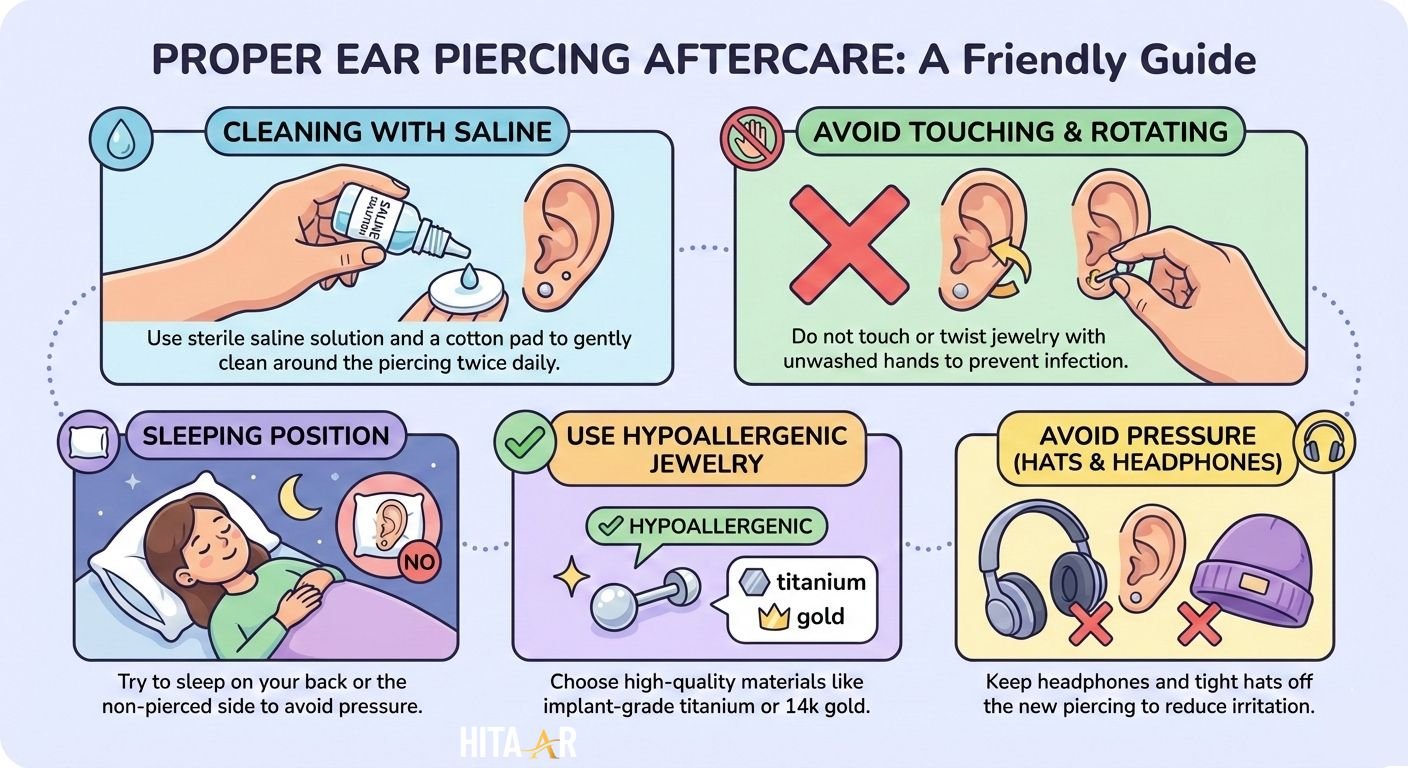
Strong ear piercing aftercare habits improve results. Consistency matters more than products.
Simple routines outperform harsh treatments.
How to Clean Ear Piercings Properly
Use saline solution for piercings twice daily. Clean gently without twisting.
Dry carefully to prevent moisture buildup.
What to Avoid During the Healing Process
Avoid swimming in public water. Avoid heavy hair products.
Never rush changing earrings too early.
When You Can Safely Change Jewelry
Wait until pain, swelling, and discharge disappear. Full healing prevents reinjury.
If unsure, wait longer.
Signs Your Ear Piercing Is Healing Normally
Healthy healing includes mild soreness fading over time. Occasional itching remains normal.
Progress feels gradual, not painful.
Warning Signs of an Infected Ear Piercing
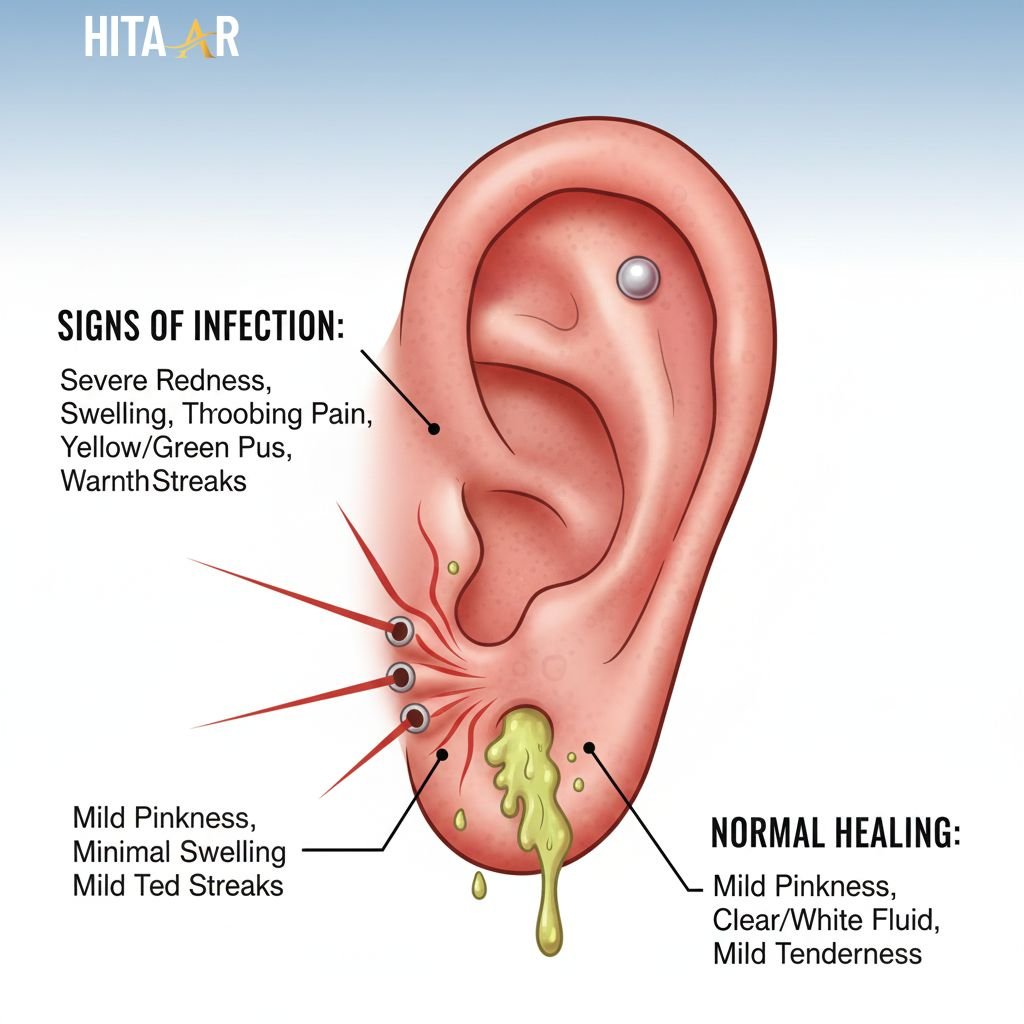
Severe pain, thick pus, or spreading redness indicate infection. Fever signals urgency.
Seek care early to avoid scarring.
How to Speed Up Ear Piercing Healing Safely
People often ask how to heal ear piercings faster. The truth is simple habits help most.
Hydration, rest, and hygiene support natural healing.
Common Ear Piercing Healing Problems Explained
Most issues arise from pressure or poor care. Awareness prevents setbacks.
Early action stops complications.
Swelling and Redness
Swelling fades with reduced pressure. Cold compresses help briefly.
Persistent swelling needs evaluation.
Pain That Lasts Too Long
Ongoing pain suggests irritation or infection. Jewelry size may be wrong.
Consult a professional piercer.
Bumps, Keloids, and Scarring
Irritation bumps differ from keloids. Genetics influence scarring risk.
Early care reduces permanent marks.
When to See a Professional Piercer or Doctor
Seek help if pain worsens or discharge smells foul. Professionals assess jewelry fit and infection.
Frequently Asked Questions About Ear Piercing Healing
How long does it take for ear piercings to fully heal?
Surface healing appears early. Deep healing takes months, especially in cartilage.
Patience prevents problems.
Why do cartilage piercings take longer to heal?
Limited blood flow slows repair. Movement and pressure increase stress.
That’s why cartilage needs time.
Can ear piercings heal faster with proper care?
Yes. Good hygiene, rest, and quality jewelry shorten recovery.
Rushing healing always backfires.
Stay informed with balanced reporting and fresh perspectives by visiting hitaar.