

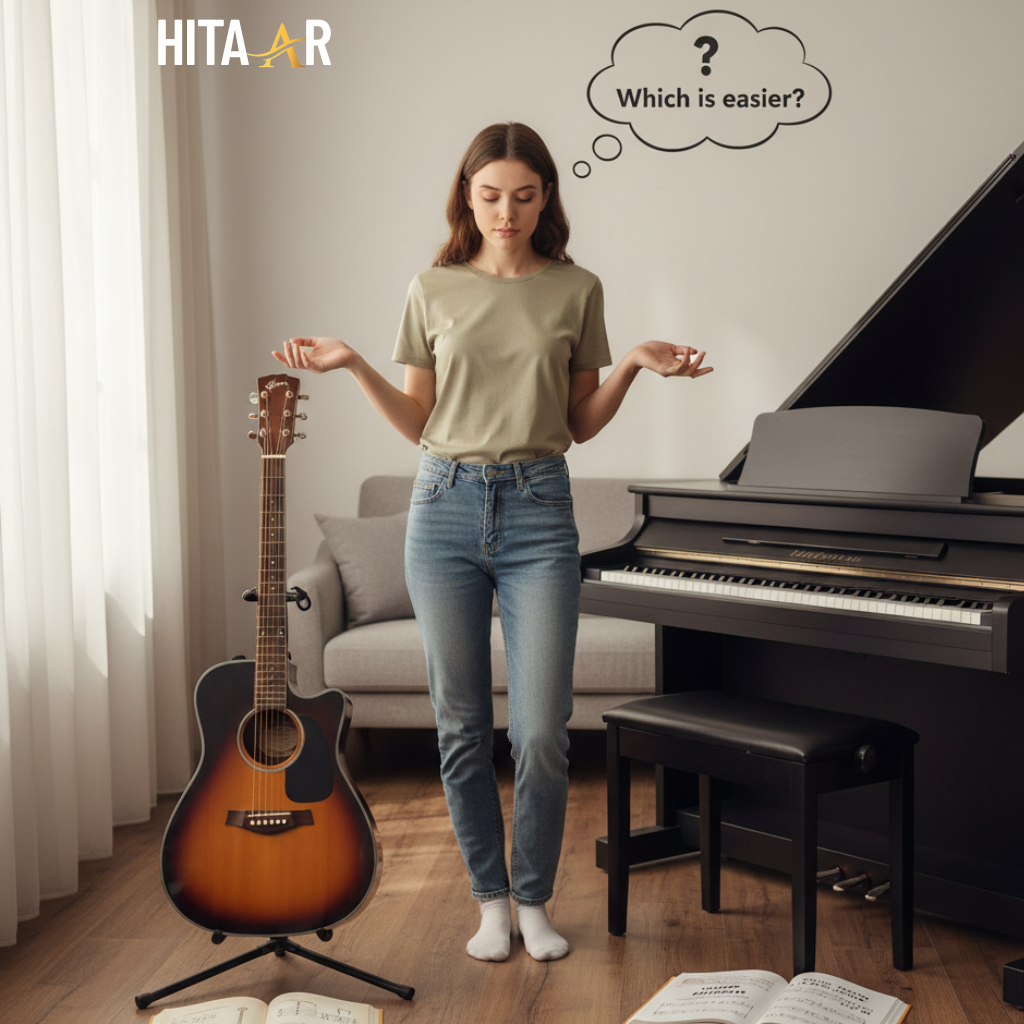
Introduction: Guitar vs Piano – Which One Is Easier for Beginners?
The debate about whether guitar or piano is easier to learn has existed for decades. Beginners often feel confused because both instruments look simple on the surface—but once you start learning, you quickly realize that each one has its own challenges, strengths, and learning curve.
Some people pick up a guitar, strum a few basic chords, and play their first song within days. Others sit at a piano for the first time and instantly understand the layout of notes because everything is visually clear. Choosing between the two depends on your learning style, your goals, and what kind of music inspires you.
This friendly, beginner-focused guide breaks down the real differences between the guitar vs piano difficulty level. Using music education principles, practical experience, and competitor research, this guide helps you understand:
What makes an instrument “easy,”
how the learning curve differs,
what challenges beginners face,
and how fast you can progress on each instrument.
By the end, you’ll know exactly which instrument fits your personality, music taste, and long-term goals.
What Makes an Instrument “Easy” to Learn?
When deciding whether guitar or piano is easier to start with, it’s important to understand what actually makes an instrument “easy” to learn. The truth is, “easy” is subjective and depends on a mix of physical, mental, and practical factors.
Factors That Affect Ease of Learning
Learning Curve
Every instrument has its own learning curve. Some beginners grasp basic guitar chords quickly, while others find piano scales intuitive thanks to the visual layout of keys. Understanding how fast you can see progress is key to staying motivated.Physical Comfort
Playing guitar often requires finger strength and coordination, which can lead to temporary finger pain or calluses. On the piano, there’s less physical strain, but beginners must master hand coordination and posture.Accessibility and Cost
A beginner-friendly guitar can cost less than a quality beginner keyboard or piano, and it’s more portable. Conversely, a piano or weighted keyboard often requires more space and investment.Mindset and Consistency
How you practice matters more than the instrument itself. Daily consistent practice, patience, and a willingness to make mistakes define whether an instrument feels easy or frustrating.Personal Goals and Music Style
The type of music you want to play also determines ease. Learning guitar may feel easier if you’re drawn to rock, pop, or worship music, while piano might be simpler if you enjoy classical, jazz, or melodic solo pieces.
Why “Easy” Is Different for Everyone
There’s no universal answer. An adult with long fingers may adapt to guitar quickly, while a child may thrive on the piano because the visual layout of keys is easier to grasp. Your learning style, attention span, and motivation significantly influence which instrument feels easier to start.
Is the Guitar Easy to Learn for Beginners?
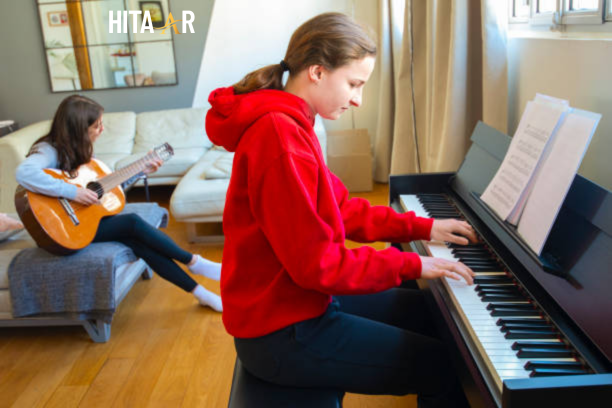
For many beginners, the guitar is the first instrument that comes to mind. It’s portable, versatile, and widely featured in popular music. But how easy is it really to learn? Let’s break down the learning curve and common beginner experiences.
Overview of the Guitar Learning Curve
Guitar beginners often notice quick progress in the first few weeks. Simple chords like G, C, and D can be learned fast, allowing you to play recognizable songs within days. However, mastering chord transitions, strumming patterns for beginners, and finger placement takes consistent practice.
The guitar learning curve varies depending on the type of guitar:
Acoustic Guitar: Slightly harder for beginners due to thicker strings, but great for building finger strength.
Electric Guitar: Easier on the fingers, but requires additional skills like controlling effects and amp settings.
Classical Guitar: Nylon strings are easier on fingers, but fingerstyle techniques can be challenging.
Why Many Beginners Feel Comfortable Quickly
Basic open chords are beginner-friendly.
Popular songs often use just three or four chords.
Strumming patterns for beginners can be simple and repetitive.
The guitar allows for immediate play-and-sound feedback, which is motivating.
Challenges Most Learners Face
Finger pain when learning guitar is common due to pressing strings on the fretboard.
Strumming evenly and keeping rhythm can be tricky.
Coordinating both hands, especially for barre chords, requires patience.
Memorizing chord shapes and transitioning smoothly can slow progress at first.
Advantages of Learning Guitar First
Portability – You can take it anywhere, unlike a piano.
Quick to Play Simple Songs – Many songs are playable with only a few chords.
Flexible Genres – Pop, rock, worship, folk, and blues are beginner-friendly.
Affordable Beginner Options – You can start with a basic acoustic guitar without a huge investment.
Challenges That Beginners Face on Guitar
Sore Fingers and Calluses – Pressure on strings can be uncomfortable initially.
Holding Chords Cleanly – Finger placement requires practice for a clear sound.
Strumming and Rhythm Issues – Learning timing and patterns can be frustrating.
Coordination of Both Hands – Chords and strumming together demand patience and repetition.
Is the Piano Easy to Learn for Beginners?
The piano is often considered one of the most beginner-friendly instruments, thanks to its clear, visual layout and logical note arrangement. But does that mean it’s truly easy to learn? Let’s explore the piano learning curve and what beginners can expect.
Overview of Piano Learning Curve
Many beginners find the piano intuitive at first. The visual layout of piano keys allows players to see relationships between notes, intervals, and scales easily. Unlike guitar, you don’t need to worry about finger pressure or painful calluses, which makes initial practice more comfortable.
However, mastering the piano requires hand coordination, timing, and the ability to read sheet music—skills that develop gradually with consistent practice.
Why Visual Layout Makes Notes Easier to Understand
White and black keys form patterns that are easy to recognize.
Scales and chords are visually straightforward, helping beginners understand music theory quickly.
Both hands can play melody and harmony simultaneously, making it ideal for solo performances.
Challenges Piano Beginners Encounter
Left-hand independence can be tricky; beginners often struggle to play different rhythms with each hand.
Proper posture and technique are essential to avoid strain over long sessions.
Reading sheet music for piano is a skill that takes time to develop.
A keyboard or piano investment is required, which can be costly and requires space.
Advantages of Learning Piano First
Easy to See Notes and Intervals – Helps beginners understand music visually.
No Finger Pain – Unlike guitar, pressing keys is gentle.
Great for Understanding Music Theory – Chords, scales, and harmonies are easier to visualize.
Ideal for Solo Performance – Can play melody and chords simultaneously.
Challenges That Beginners Face on Piano
Need for Proper Sitting Posture – Bad posture can lead to discomfort or injury.
Left-Hand Independence – Playing separate parts with each hand takes practice.
Requires a Keyboard/Piano – Bigger investment than a beginner guitar.
Reading Sheet Music – Takes time to learn and practice consistently.
Side-by-Side Comparison: Guitar vs Piano for Beginners
Choosing between guitar and piano becomes easier when you compare them directly. This comparison considers learning curve, cost, comfort, versatility, and other practical factors to help beginners decide.
Guitar vs Piano Comparison Table
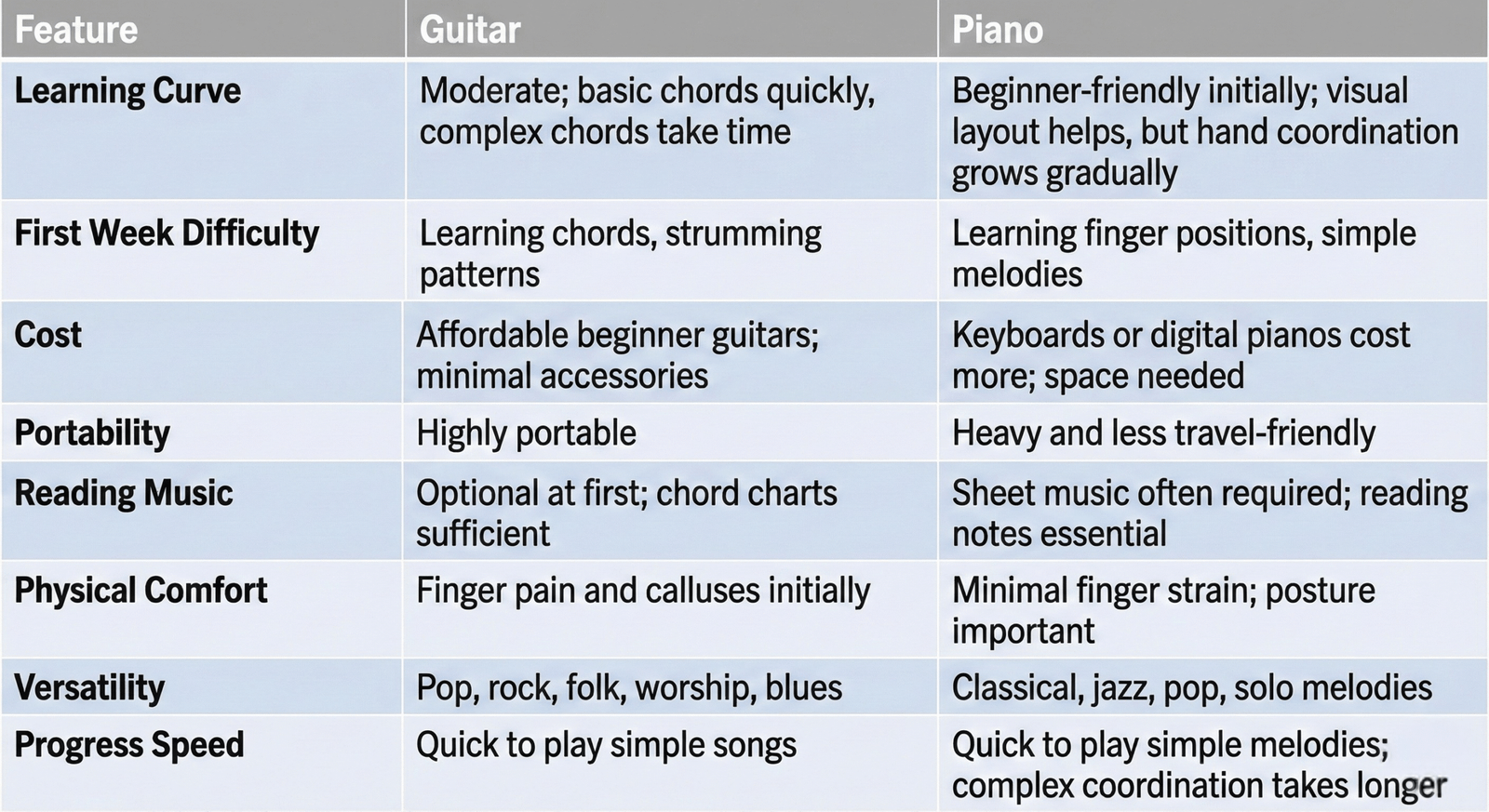
Learning Curve: Guitar allows beginners to play recognizable songs faster, while the piano’s visual layout aids understanding of music theory.
Physical Comfort: Guitar can cause finger pain at first, while piano avoids finger strain but demands posture awareness.
Portability & Cost: A Guitar is easier to carry and often cheaper; a piano requires space and a higher investment.
Versatility & Styles: Both instruments suit different genres. Your personal music style should influence your choice.
Which One Is Easier for Kids vs Adults?
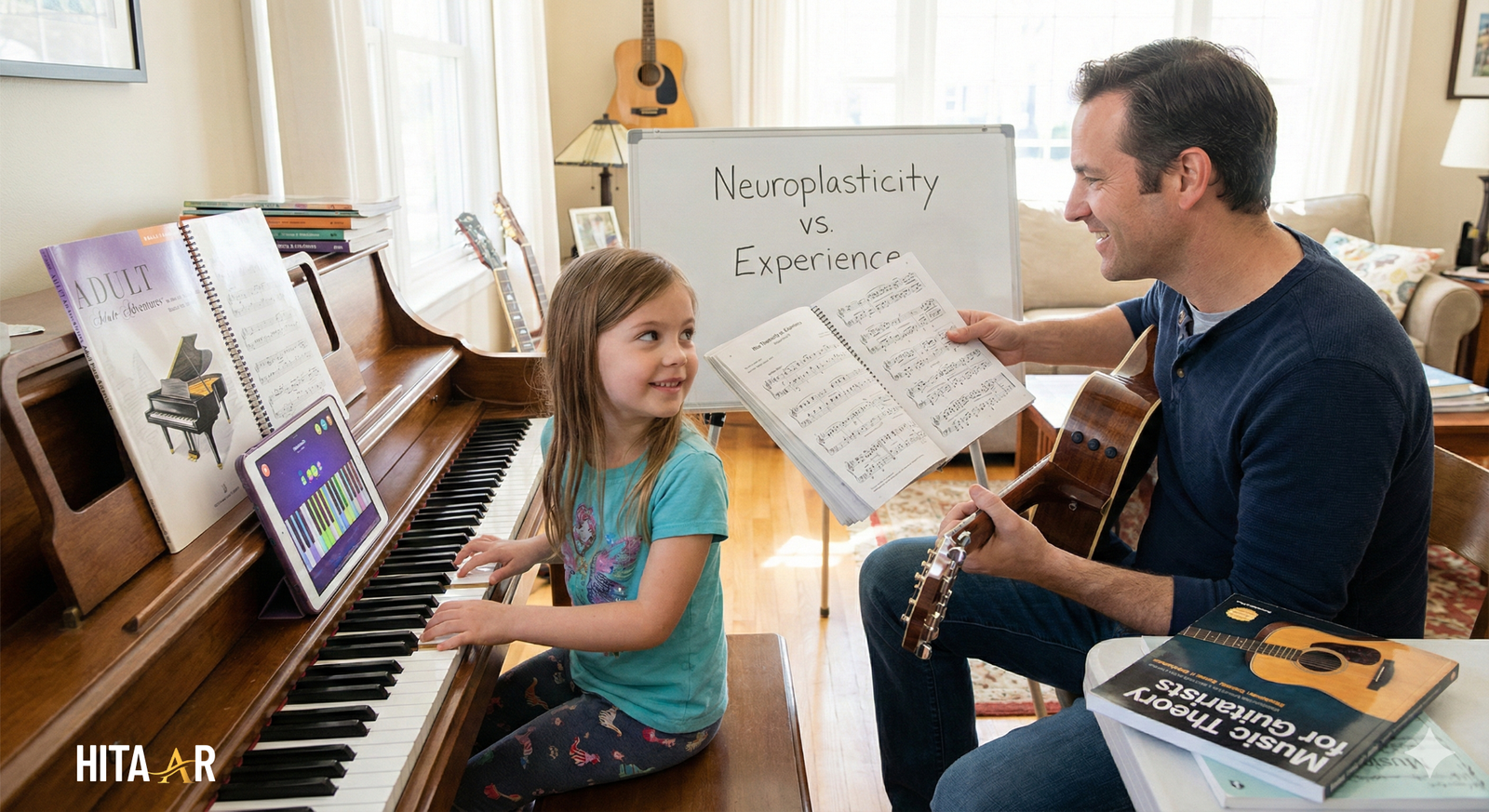
Age plays a significant role in how easy it is to learn guitar or piano. Children and adults have different physical abilities, attention spans, and learning styles, which can affect progress.
Why Children Often Do Well with Piano
Visual Layout of Keys: Children quickly grasp patterns on the piano, helping them understand scales and chords.
Hand Size and Coordination: Smaller hands fit the keyboard more comfortably than reaching chords on a guitar.
Structured Learning: Kids often respond well to clear step-by-step instructions, which piano lessons provide.
Attention Span: Piano allows short, focused practice sessions with immediate visual feedback, keeping children engaged.
Why Adults May Prefer Guitar
Portability: Adults may value a guitar’s portability for travel, social events, or casual playing.
Quick Gratification: Playing a few easy guitar chords allows adults to perform songs within a short time, boosting motivation.
Genre Preference: Adults often choose the guitar for genres like rock, folk, or worship, which are easier to start without extensive music theory.
Learning Style: Adults often thrive with self-guided practice or online lessons, which are widely available for guitar.
Learning Style Differences
Kids may excel with structured lessons, repetition, and visual aids, making piano a strong choice.
Adults may benefit from hands-on experimentation, making guitar easier to stay motivated.
The Role of Music Theory in Learning Both Instruments
Understanding music theory is a key factor in determining how easy it is to learn guitar or piano. Both instruments offer unique advantages for developing musical knowledge, but the approach differs.
How Piano Helps Understand Chords and Scales Faster
Visual Layout of Keys: The piano visually represents half steps and whole steps, making scales and intervals easier to grasp.
Chords Made Clear: Beginners can see and play chords at a glance, helping them understand harmony quickly.
Ear Training for Beginners: Playing different notes together helps develop an intuitive sense of melody and harmony.
Melody vs Harmony Learning: Piano allows simultaneous practice of melody with the right hand and harmony with the left hand.
How Guitar Requires Pattern Memorization
Guitar learning often relies on chord shapes and fretboard patterns rather than visual note locations.
Beginners memorize scales and chord progressions, which builds muscle memory but may delay theoretical understanding.
Strumming and rhythm patterns add another layer of skill that is separate from theory.
Which One Is Easier for Songwriting
Piano: Easier for composing complex chord progressions and understanding harmonic relationships.
Guitar: Ideal for songwriting based on riffs, strumming, and chord sequences—especially in pop, rock, and folk.
Takeaway: Piano provides a faster path to understanding music theory visually, while guitar focuses more on pattern recognition and muscle memory. Your choice may depend on whether you want a strong theoretical foundation or a practical, performance-oriented approach.
What Type of Music Do You Want to Play?
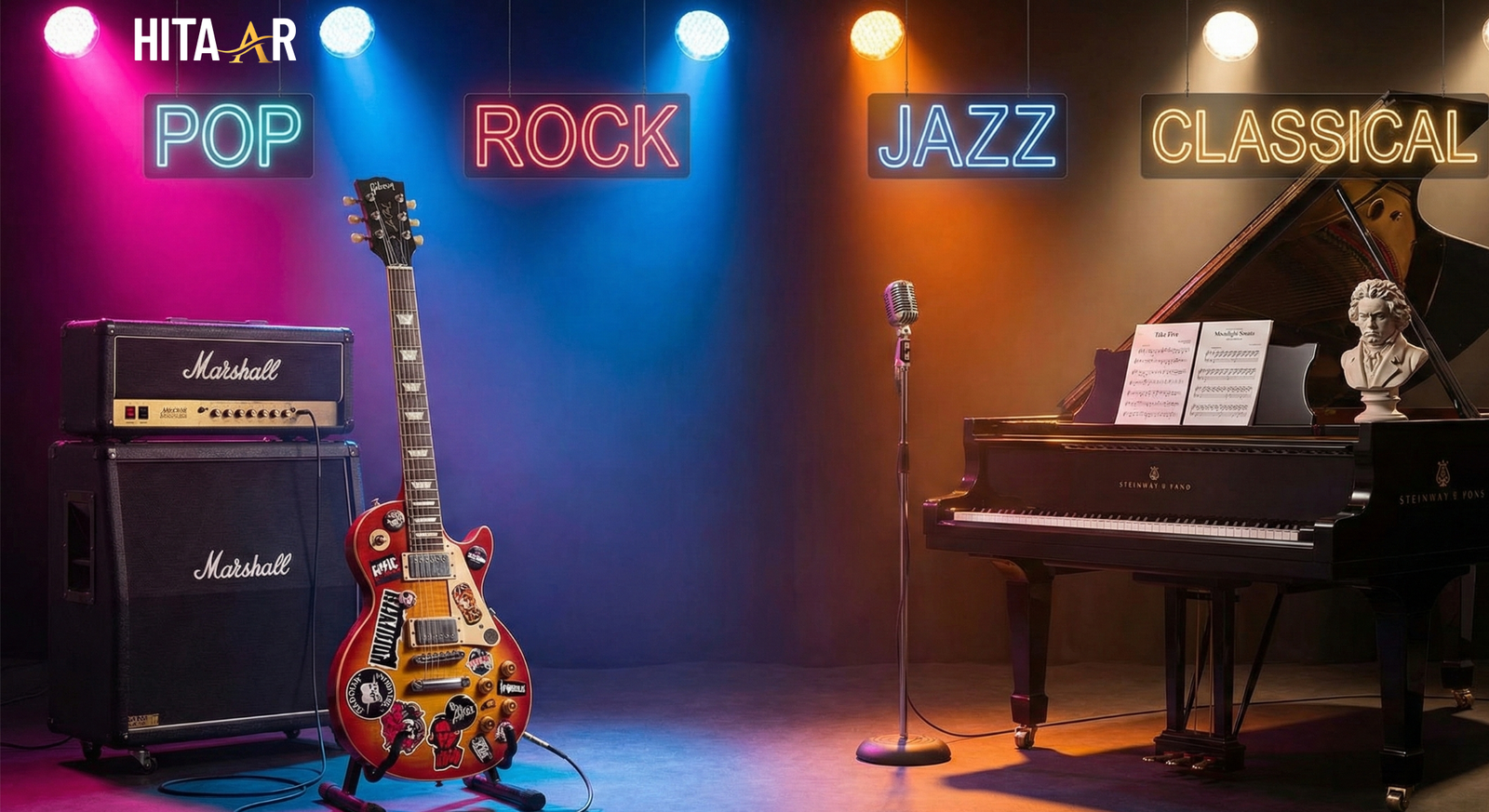
The style of music you want to play heavily influences whether guitar or piano feels easier to learn. Beginners who align their instrument choice with their preferred genres often stay motivated and make faster progress.
Choosing Based on Preferred Music Style
Pop and Rock: Guitar is often easier for beginners because many songs use simple chord progressions and strumming patterns.
Jazz and Classical: Piano is ideal for learning melodies, harmonies, and improvisation. The visual layout of the keys helps beginners understand complex theory.
Worship and Folk: Guitar allows quick access to playing songs in group settings and accompanies singing easily.
Solo Melodies: The Piano excels at performing pieces that combine melody and chords simultaneously.
Genres Easier on Guitar
Rock, pop, folk, blues, country, worship music
Songs often rely on a few easy guitar chords
Strumming patterns and fingerpicking provide variety without steep theory requirements
Genres Easier on Piano
Classical, jazz, R&B, pop ballads, and solo instrumental pieces
Offers easy visualization of chords, scales, and harmonies
Ideal for understanding melody versus harmony
Why Personal Interest Is the Biggest Factor in “Ease”
No matter which instrument is objectively easier, your interest and motivation play the largest role. Beginners who love the music they’re learning are more likely to practice consistently, overcome challenges, and progress faster.
Takeaway: Choose your first instrument based on the music you enjoy most. Passion and consistency often make an instrument feel easier than any technical factor.
Time Required to Get Good at Guitar vs Piano
Understanding the realistic timeline for progress can help beginners set achievable goals and stay motivated. While everyone learns at their own pace, there are general expectations for guitar and piano beginners.
Average Progress Timeline
Guitar: Beginners can play simple songs within 1–2 weeks using basic chords. Mastery of barre chords, fingerpicking, and advanced techniques may take 6–12 months.
Piano: Beginners can play simple melodies within the first week, but coordinating both hands and reading sheet music typically takes 2–3 months. Mastery of scales, chords, and advanced pieces can take 1–2 years.
What Beginners Can Expect in the First 30 Days
Guitar: Learn easy guitar chords for beginners, strumming patterns, and one or two complete songs. Finger pain may occur initially but diminishes as calluses develop.
Piano: Learn basic piano scales, simple songs for both hands, and proper piano posture and technique. Coordination between hands improves gradually.
Long-Term Skill Growth
Guitar skills grow with regular practice, including chord transitions, rhythm accuracy, and soloing techniques.
Piano skills grow through hand independence, understanding music theory, improvisation, and playing more complex pieces.
Realistic Expectations
Neither instrument is mastered overnight. Consistent practice—ideally 15–30 minutes daily—yields the fastest progress.
Short-term achievements, like playing a favorite song or melody, provide motivation and a sense of accomplishment.
Takeaway: Guitar offers faster initial gratification, while piano requires patience for hand coordination and music reading but provides strong long-term musical foundations.
Common Mistakes Beginners Make on Both Instruments
Many beginners struggle not because the instrument is too hard, but because of common mistakes that slow progress. Understanding these pitfalls can help learners avoid frustration.
1. Unrealistic Expectations
Expecting to play complex songs in days rather than weeks can lead to disappointment.
Progress takes time; celebrating small achievements keeps motivation high.
2. Switching Instruments Too Early
Some beginners jump between guitar and piano hoping for faster results.
Consistency is key—focusing on one instrument initially accelerates skill development.
3. Wrong Technique
Guitar: Poor finger placement, incorrect strumming, or tense hands can cause pain and slow progress.
Piano: Slouching, wrong wrist position, or pressing keys too hard can lead to discomfort and inefficient learning.
4. Inconsistent Practice
Sporadic practice leads to slower muscle memory development and weaker rhythm skills.
Short daily sessions (15–30 minutes) are more effective than long, irregular sessions.
5. Not Learning Songs You Enjoy
Practicing songs that feel boring or overly difficult reduces motivation.
Choosing beginner-friendly songs that match personal taste encourages consistent practice and faster improvement.
Tips to Make Learning Either Instrument Easier
Learning guitar or piano becomes much more manageable when you follow practical tips designed for beginners. These strategies focus on consistency, technique, motivation, and smart practice habits.
Simple Daily Practice Routine
Commit to 15–30 minutes each day instead of long, irregular sessions.
Focus on small, achievable goals like learning one chord, scale, or song section.
Use warm-ups to improve finger dexterity and coordination.
Choosing the Right Instrument Quality
Beginner guitars or keyboards with good playability reduce frustration.
Avoid instruments that are too cheap or difficult to play, as they can hinder progress.
For piano, weighted keys help simulate real piano feel, improving technique early.
Learning with Apps, Videos, or a Teacher
Apps & Online Tutorials: Great for beginners who need visual guidance and structured lessons.
Teachers: Provide immediate feedback, correct technique, and personalized practice plans.
Combining both methods often produces the fastest results.
Setting Clear Practice Goals
Break down larger goals (like playing a song) into smaller steps (chords, strumming, rhythm).
Track progress to stay motivated and notice improvement over time.
Staying Motivated with Small Wins
Celebrate each milestone: learning a chord, playing a simple song, or completing a scale.
Record your progress and revisit older pieces to see improvement.
Play songs you enjoy to keep practice fun and relevant.
Final Verdict: Is Guitar or Piano Easier for Beginners?
Deciding whether guitar or piano is easier depends on your goals, learning style, and personal preferences. Both instruments have beginner-friendly advantages and specific challenges.
Guitar: Pros and Cons for Beginners
Pros: Portable, affordable, quick to play simple songs, versatile across genres like pop, rock, worship, and folk.
Cons: Finger pain, coordination of hands, strumming and rhythm challenges, and barre chords require patience.
Piano: Pros and Cons for Beginners
Pros: Visual layout makes learning notes and chords easier, no finger pain, excellent for understanding music theory, ideal for solo performance.
Cons: Requires a keyboard/piano, proper posture, and hand coordination, reading sheet music, higher initial investment.
Balanced Conclusion
For Quick Gratification: Guitar may feel easier because beginners can play simple songs in days.
For Musical Foundations: Piano may feel easier because it visually reinforces music theory and develops strong hand coordination.
Age Consideration: Kids often excel with piano, while adults may prefer guitar for portability and fast results.
Music Style: Your preferred genre and personal interest significantly affect perceived ease.
Recommendation: If possible, try both instruments before committing. This hands-on experience will help you determine which instrument feels more natural and enjoyable. Ultimately, consistency, motivation, and practice matter more than the instrument itself.
Frequently Asked Questions (FAQs)
1. Can you learn both instruments at the same time?
Yes, but it can slow progress on each. Beginners may benefit more from focusing on one instrument first, building basic skills, and then exploring the second instrument. Combining both later enhances musical understanding.
2. How long does it take to play songs on guitar vs piano?
Guitar: Simple songs with 2–4 chords can be played in 1–2 weeks with daily practice.
Piano: Simple melodies can be learned in 1–2 weeks, but coordinating both hands and playing chords may take 3–4 weeks.
3. Which one is cheaper to start?
Guitar: Affordable beginner guitars start at $50–$150, with minimal accessories.
Piano: Digital keyboards cost $150–$400 for a beginner-friendly model; acoustic pianos are more expensive and require space.
4. Which instrument is better for kids?
Piano is often better for kids due to hand size, visual layout, and structured learning.
Guitar is suitable for older children who can manage chord stretches and finger strength.
5. Is piano theory harder than guitar theory?
Piano theory is visually easier because scales and chords are laid out clearly.
Guitar theory relies more on memorizing patterns, which can feel harder at first but works well for practical playing and songwriting.